 Collection Pan Arab Luxury Magazine
Related Articles
DANIEL ROSEBERRY STRIPS READY-TO-WEAR BACK TO ITS ESSENCE IN THE BASEMENT OF THE LOUVRE
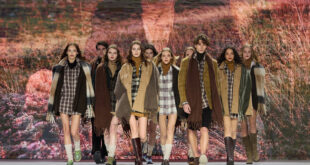
Paris Fashion Week returned to the Louvre’s basement for Schiaparelli’s Ready-to-Wear Spring/Summer 2027 collection, titled “Going Clear”. The collection is a lesson in distillation, fewer distractions, a sharper point of view and a wardrobe built around the woman who wears it.
Creative Director Daniel Roseberry has long found it harder to define the house’s ready-to-wear than its couture. This season he answers the question by breaking the couture codes down. Signature gowns, necklines and silhouettes are reimagined as separates, tops and bottoms that can be mixed, matched and made one’s own. It is a nod to the American sportswear tradition, set against the Frenchness of the maison and Roseberry’s own Texas roots. A restrained palette of Schiap black, bone and butter, with a few pops of color, keeps the pieces working together like a modular wardrobe “kit”.
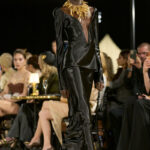
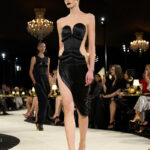
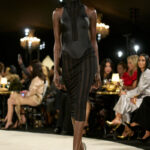
Roseberry set out to separate precision from sharpness, and severe lines are rare here. Lettuce hems and asymmetrical openings soften the tailoring. Ruffles in leather and linen take their inspiration from the curtains that once hung in the windows of Elsa Schiaparelli’s Place Vendôme atelier, a detail that always seemed slightly out of place, which is exactly why he loves it.
Elsa’s love of surrealist humor appears in new embroidery, where vegetable and feather motifs bloom across sheer shirts, moving the richness of couture off silk and velvet and onto something almost weightless. The vegetable embroidery also appears on one of eight versions of the classic Schiap jacket, offered in archive-inspired shades of kingfisher blue, moss green and salmon pink.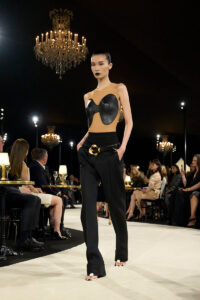
Knitwear is the quiet star of the season, including a sheer viscose “tree-bark” knit that echoes a fabric Elsa herself developed. Broderie anglaise travels from couture to ready-to-wear, and the little black cocktail dress returns in what Roseberry calls “revenge dressing.”
Handbags pair archetypal shapes, the hobo and the pocketbook, with playful touches, such as a brass mouth that doubles as a handle. Shoes lean toward the everyday, with a babouche, a knit bootie inspired by a late-1930s Elsa style, a ball-toed mule drawn from 1950s film starlets and a lower totem heel.
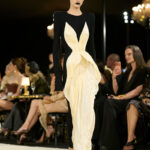
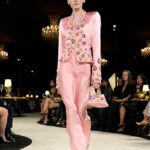
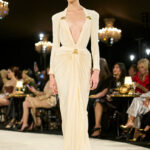
The jewelry may be the most charming chapter, a menagerie of “spirit animals” in earrings, cuffs and brooches shaped like horses, dolphins, pigs, dogs, cats and spiders. The question the house poses is which one reflects your essential nature. Meanwhile, the beloved keyhole and lips codes reappear in unexpected places, from the top of a shoe to the back of a collar.
For Roseberry, the title is a step away from the industry’s chase for status, approval and social media noise, toward a voice that is singular, intimate and timeless. Because Schiaparelli produces for a very limited number of stores, there is no separate “commercial” collection: what is shown is what is made, bought and worn.
For our readers in the luxury and jewelry trade, the message is clear: in a crowded market, a strong identity and a consistent voice still carry the most weight.