 Collection Pan Arab Luxury Magazine
Related Articles
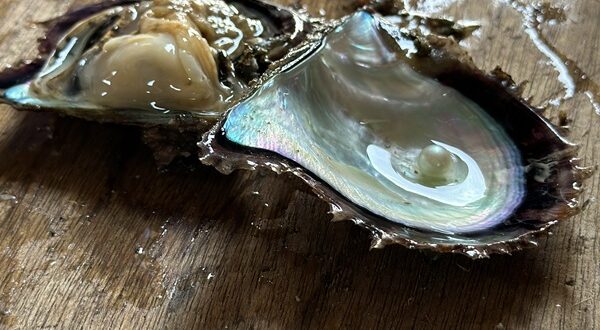
There is a particular silence that settles over the sorting rooms of Kobe. It is not the silence of emptiness, but of intense concentration, the quiet that comes when generations of expertise meet a single, iridescent gem. In these rooms, under calibrated light, the fate of the Japanese Akoya pearl is decided grain by grain.
If the past three years have taught the jewellery trade anything, it is that we have been treating these gems as mere components for far too long. According to a new industry briefing from the Japan Pearl Exporters’ Association (JPEA), the Akoya pearl has completed its metamorphosis. It is no longer simply a jewellery component, rather a scarce natural asset with an intrinsic value trajectory that, in certain periods, has outpaced gold.
For the professional buyer, the gemmologist, and the luxury house, this shift demands a recalibration of how we source, price, and narrate the story of one of the world’s most beloved gems.
The JPEA, was established in 1954 as the institutional authority for Japanese Akoya exports, its data is the bedrock upon which the international pearl trade is built, and that data tells a story of profound structural change.
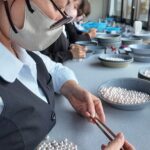
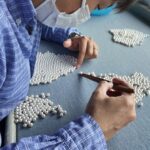
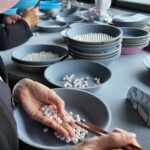
Since 2019, a trifecta of crises has reshaped supply, and mass mortality events in major farming areas, driven by unidentified infectious agents, decimated productive oyster stock. Warming seas, a persistent reality for marine aquaculture, have disrupted nacre deposition, thinning coatings and reducing the availability of suitable farming zones. Compounding these biological challenges is a human one: a rapidly ageing workforce with fewer young entrants to inherit the precise, near-surgical skill of nucleation.
The result is a supply curve that has tightened dramatically, particularly for the high-grade specimens that define the market: the 8-millimetre-plus rounds with the thick, lustrous nacre that earns the Hanadama designation. Prices have doubled in some categories since 2023, yet demand, particularly from Asia and a growing cohort of Western collectors seeking “conscious luxury”, shows no sign of abating.
Japan’s pearl export recovery tells the story vividly, from a COVID-era low of ¥7.6 billion in 2020, the market rebounded to ¥23.75 billion in 2022, before surging to a near-record ¥45.6 billion in 2023. The Fisheries Agency’s 2030 target of ¥47.2 billion, it seems, is not an aspiration but an inevitability, driven not by volume but by sustained value growth.
To understand the Akoya market is to understand the geography of expertise, the JPEA is headquartered in Kobe for a good reason. This port city is the global nerve centre for pearl selection, processing, grading, and trade. Nowhere else on earth boasts a higher concentration of pearl businesses per square kilometre.
This is not a coincidence of logistics alone, though Kobe’s connectivity is unquestionable. It is the accumulation of expertise, families who have spent generations refining the art of sorting, matching, and grading. For the international buyer, Kobe remains the indispensable pilgrimage, where the raw harvest from the farms of Ehime, Nagasaki, and Mie is transformed into the matched strands and calibrated lots that command premium prices in Geneva, New York, and Hong Kong.
This year presents two distinct B2B moments in the city, the first is the 30th International Jewellery Kobe (IJK) running from May 14 to 16, a general jewellery fair with a distinctly pearl-centric flavour given its location. The second, and arguably the world’s most singular pearl event, is the Japan Pearl Fair, held June 8 to 10 at the Kobe International Exhibition Hall. Organized by the Japan Pearl Promotion Society (JPPS), it is the only large-scale B2B exhibition dedicated entirely to pearls, bringing together over 100 Japanese businesses under one roof. For any professional seeking direct access to the heart of the supply chain, these dates are non-negotiable.
For today’s luxury consumer, particularly the younger collector entering the high-jewellery sphere, provenance is paramount. The JPEA is acutely aware of this, framing the industry’s future under a “Planet-People-Pearl” framework that moves beyond sustainability into regenerative aquaculture.
The environmental case for pearls has always been inherently strong. Oyster farming is, by nature, extractive in the most positive sense: oysters filter seawater, improving marine biodiversity as they grow. There is no mining, no geological disruption, no conflict. But the JPEA is now championing a more ambitious vision: nature-positive aquaculture that actively restores marine ecosystems.
Perhaps most intriguing is the emerging research into biomineralization, the process by which oysters convert dissolved minerals into nacre. Scientists are currently investigating whether pearl oyster aquaculture could contribute to carbon sequestration at scale. If validated, this would transform pearl farms into “blue carbon” assets, adding a new dimension of environmental value to a gem already positioned at the intersection of nature and craftsmanship.
Yet for all the talk of pricing and carbon cycles, the true fragility of the industry lies in its human capital. The briefing is candid on this point. The skills required for nucleation, daily monitoring, post-harvest processing, and grading cannot be automated. They represent a living heritage, one built over generations and transmitted through practice.
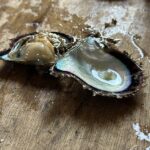
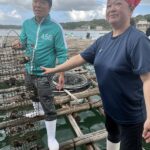

The challenge of an ageing workforce is not unique to Japan’s pearl industry, but its implications here are acute. Without active efforts to preserve and transmit these skills, the very capacity to produce the highest grades of Akoya pearls is at risk. It is a reminder that when we purchase a fine Akoya strand, we are acquiring not just a gem but a repository of knowledge that spans centuries.
As the JPEA leadership notes, the Japanese Akoya pearl represents the finest expression of an industry’s craftsmanship and its relationship with the natural world. It is a category that has moved from commodity to collectible, from volume-driven to value-driven.
The windows for acquisition are becoming narrower and the barriers to entry for new producers remain high, and the pearls themselves, particularly those with the thick nacre and mirror-like lustre that define the Japanese standard, are becoming rarer by the season.
For the discerning jeweller, the watchmaker crafting pearl-set timepieces, or the luxury house seeking authentic narratives, the moment to engage with Kobe’s ecosystem is now. The quiet tide of scarcity has come in, and it is reshaping the pearl market for a generation.
The Japan Pearl Fair 2026 takes place from 8 to 10 June at the Kobe International Exhibition Hall. International Jewellery Kobe runs from 14 to 16 May. Trade registration is required for both events.